
Biska Jatra (Bisket Jatra) 2025 – The Grand Festival of Bhaktapur
Introduction to Biska Jatra
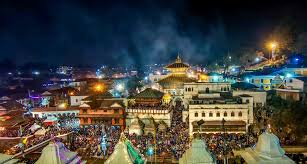
Biska Jatra, also known as Bisket Jatra, is one of Nepal’s most vibrant and culturally rich festivals, celebrated annually in Bhaktapur during the Nepali New Year (Baisakh 1st). Unlike other New Year festivals that involve simple celebrations, Biska Jatra is a powerful fusion of myth, culture, tradition, and thrilling street events. The festival is unique to Bhaktapur and neighboring villages such as Thimi and Bode and lasts for nine days of unparalleled excitement, chariot processions, ceremonial rituals, and community engagement.
In 2025, Biska Jatra will take place from April 10 to April 18, marking the beginning of the Nepali New Year 2082 BS with grand processions and historic traditions.
History and Legend Behind Biska Jatra
Biska Jatra is deeply rooted in mythology and represents the triumph of good over evil. According to legend, a serpent (Nāga) haunted a local Malla king’s palace. Every time a newlywed prince spent his wedding night in the palace, he was mysteriously found dead the next morning. The situation continued until a brave warrior volunteered to stay the night and, instead of sleeping, he slew the serpent when it emerged. His victory was celebrated with grand processions and festivals, eventually leading to what we now call Biska Jatra.
Another version of the story links the festival to the tug-of-war event between two poles, symbolizing the serpent’s downfall and the Nepali New Year’s transition from the old to the new.
Key Events and Rituals of Biska Jatra
Biska Jatra is filled with thrilling activities, cultural ceremonies, and spectacular events that attract thousands of visitors every year. The festival is particularly famous for its chariot processions, pole-raising (Linga), Sindoor Jatra (vermilion festival), and the iconic tongue-piercing ritual.
1. The Chariot Processions of Bhairab and Bhadrakali
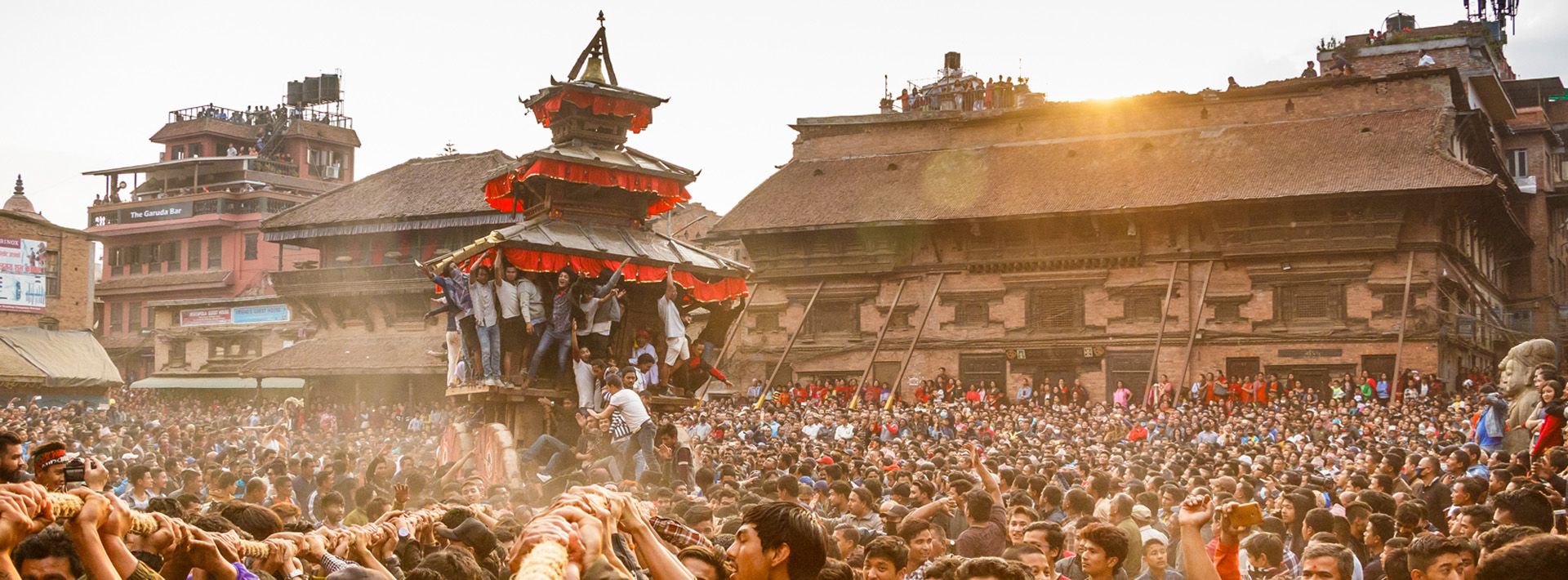
- The highlight of Biska Jatra is the massive chariot pulling event, featuring two enormous wooden chariots (raths) dedicated to Lord Bhairab and Goddess Bhadrakali.
- The chariots are pulled by two groups of locals from different parts of Bhaktapur in a fierce competition that resembles a tug-of-war.
- Thousands of people gather in Taumadhi Square to witness this dramatic event, and the direction in which the chariot moves is said to determine the fate of the year ahead.
2. The Erection and Pulling Down of the Tall Poles (Lindos)
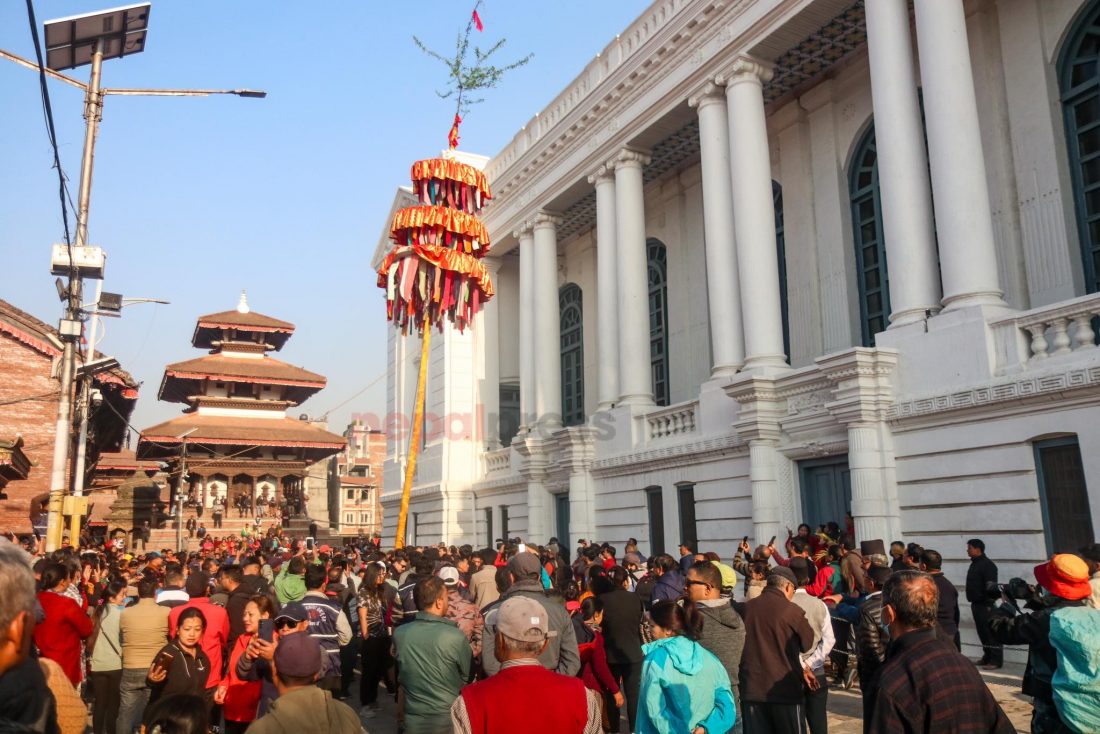
- On the main day, two gigantic wooden poles (Linga or Yosin) are erected in different locations: one in Bhaktapur Durbar Square and the other in Yosinkhel, Thimi.
- These poles represent the slain serpent from the festival’s legend.
- The final day of the festival features a grand tug-of-war contest, where people compete to pull the poles down, symbolizing the fall of evil and the start of a new year.
3. Sindoor Jatra – The Festival of Colors
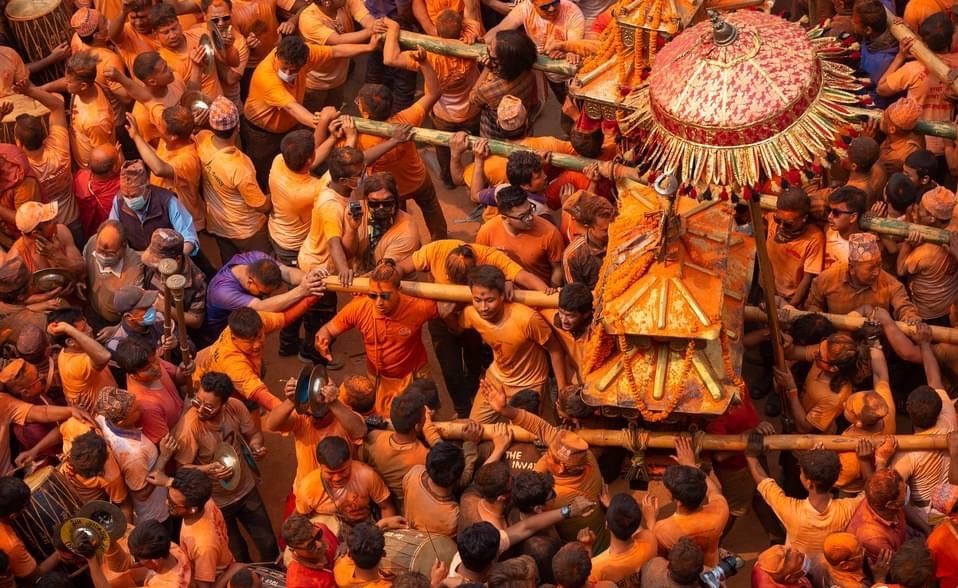
- In Thimi, Biska Jatra takes on a colorful twist with Sindoor Jatra, where people throw vermilion powder (sindoor) at each other.
- This resembles Holi, but with an even stronger cultural significance, as 32 palanquins (khat) carrying different gods and goddesses are paraded through the streets.
- The atmosphere is filled with music, dancing, and joyous celebrations, making it a perfect moment for photography.
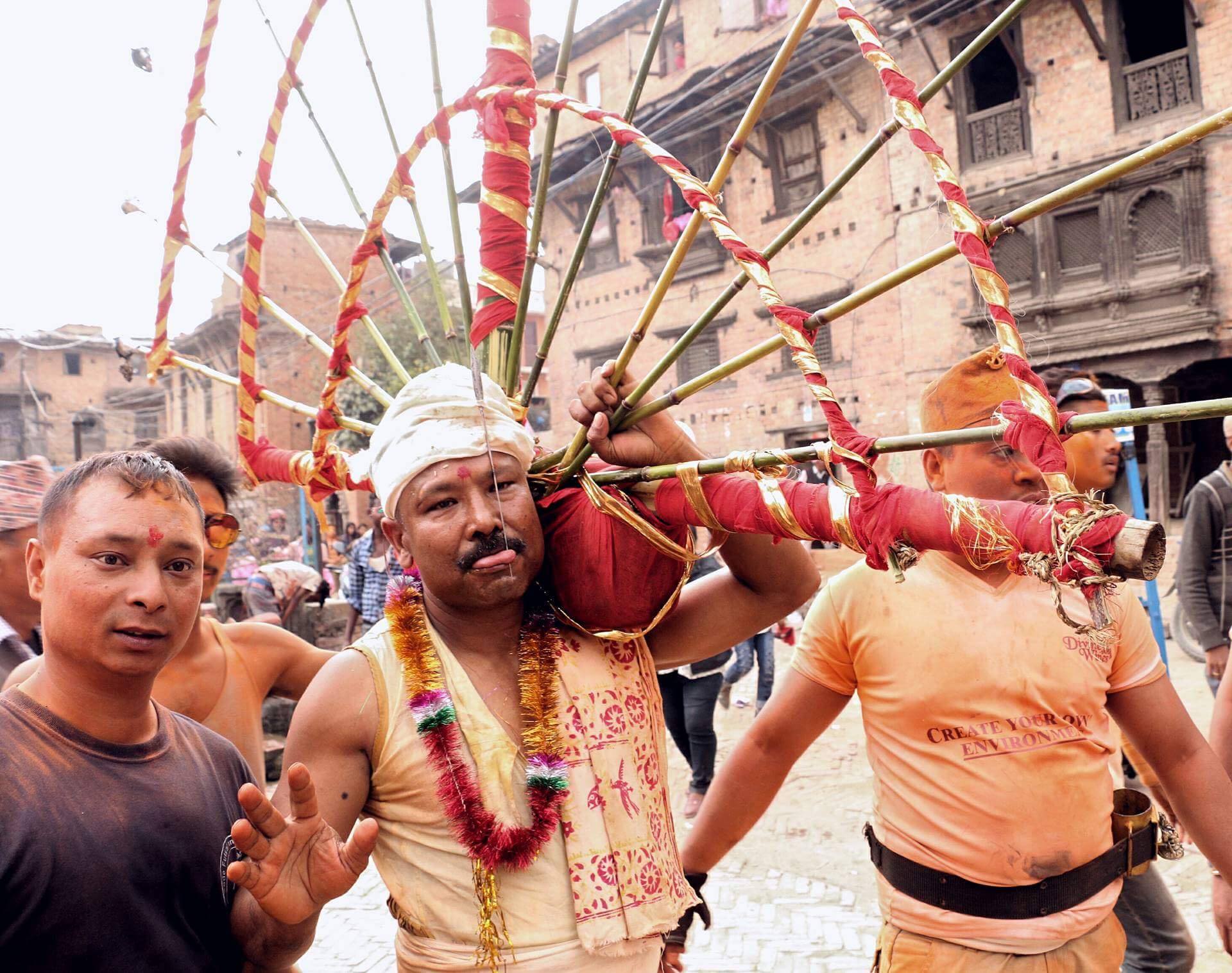
4. The Tongue Piercing Ritual in Bode
- One of the most intense aspects of Biska Jatra occurs in Bode, where a local volunteer from the Newar community undergoes a tongue-piercing ceremony.
- His tongue is pierced with an iron spike, and he walks through the town carrying burning oil lamps as an act of penance and devotion.
- This ritual is believed to bring protection, prosperity, and good fortune to the city for the upcoming year.
5. The Grand Procession of Deities
- Along with the major chariot festival, various temples and shrines bring out their idols for processions.
- The streets of Bhaktapur are filled with devotees, traditional music, and cultural dances that make the atmosphere truly magical.
Best Time and Travel Tips for Biska Jatra 2025
If you plan to witness the Biska Jatra festival in April 2025, here are some important travel tips:
✅ Best Dates to Visit: April 10–18, 2025 (Main events on April 10, 12, 13, and 18)
✅ Where to Stay: Book accommodations in Bhaktapur early as hotels fill up quickly.
✅ What to Wear: Light and comfortable clothing, with covered shoes for walking.
✅ Photography Tips: Early morning and evening are the best times to capture the chariot processions and cultural events.
✅ Local Etiquette: Respect the traditions, follow security instructions during chariot pulling, and avoid getting too close to the moving chariots.
Why Visit Biska Jatra with Kabru Adventure Holidays?
At Kabru Adventure Holidays, we provide an exclusive and immersive experience of Biska Jatra, ensuring that you enjoy every moment of this grand festival. Our Biska Jatra Photography Tour offers:
???? Prime Viewing Spots – Witness the chariot pulling, Sindoor Jatra, and pole-raising from the best locations.
???? Professional Guides – Learn the deep history and significance of each ritual. ???? Luxury Accommodation – Stay at the best hotels in Bhaktapur and Kathmandu for comfort and convenience. ???? Exclusive Cultural Experience – Enjoy local Newari cuisine, interact with festival participants, and take part in traditional celebrations. ???? Private Photography Sessions – Get access to unique angles and expert guidance for stunning festival photography.
Conclusion
Biska Jatra is more than just a festival—it’s a thrilling, vibrant, and spiritually uplifting experience that showcases Nepal’s rich culture and traditions. Whether you’re a traveler, photographer, or cultural enthusiast, this festival offers an unparalleled opportunity to dive deep into Nepal’s heritage.
???? Join Kabru Adventure Holidays from April 10–18, 2025, for an unforgettable journey into the heart of Nepal’s most exciting festival!
Contact us today to book your Biska Jatra tour!
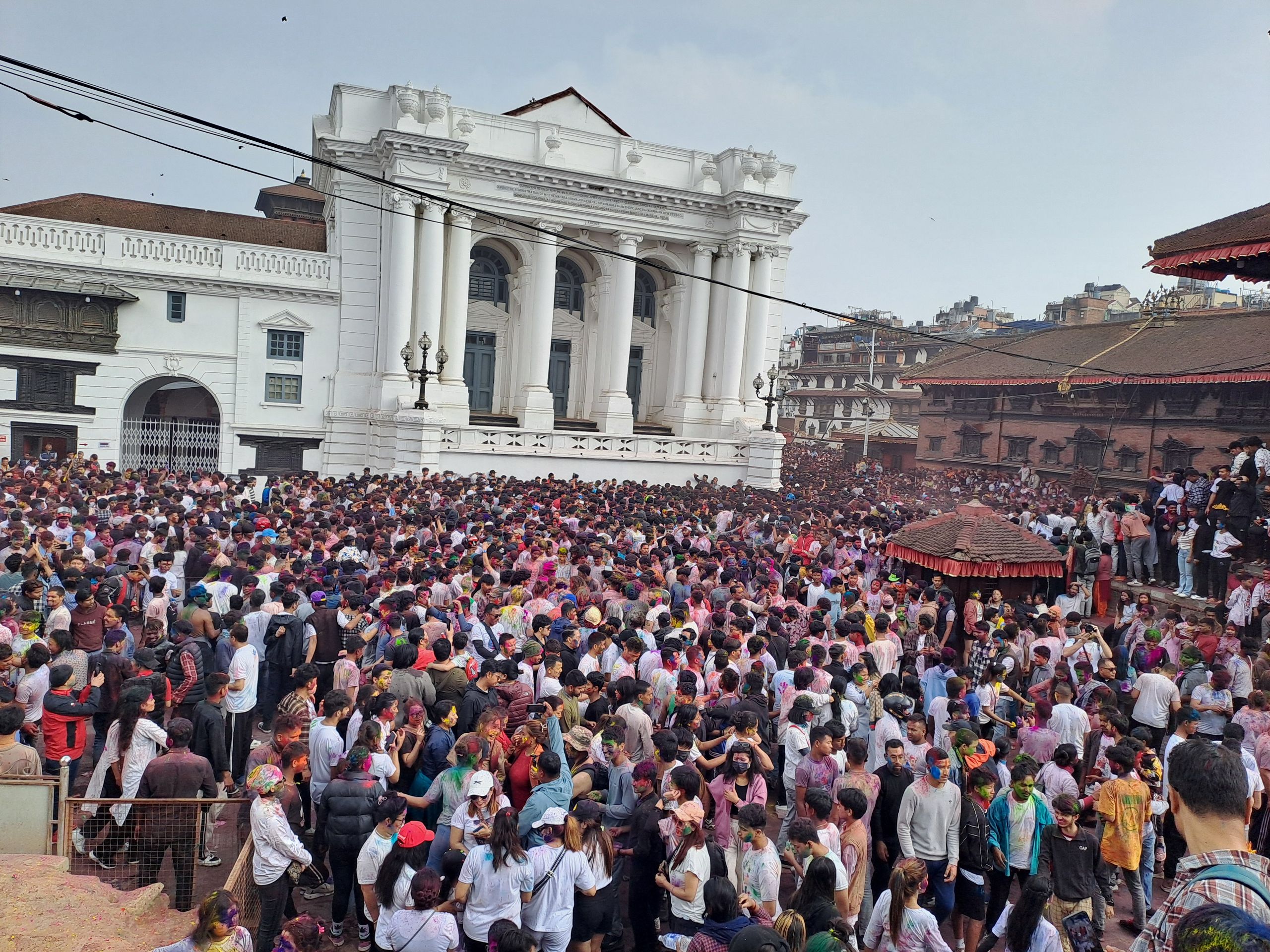
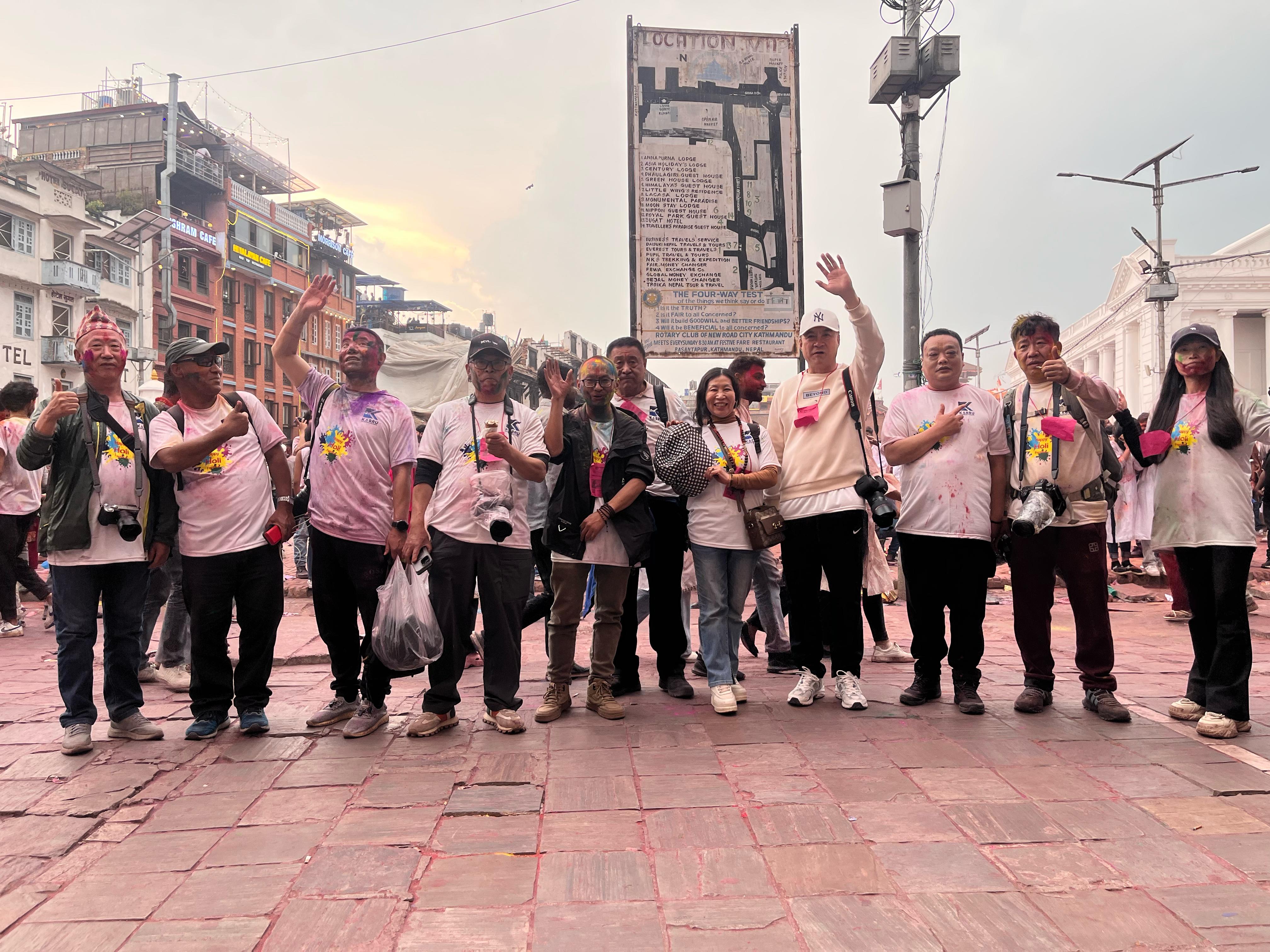 Experience the Festival of Colors with Kabru Adventure Holidays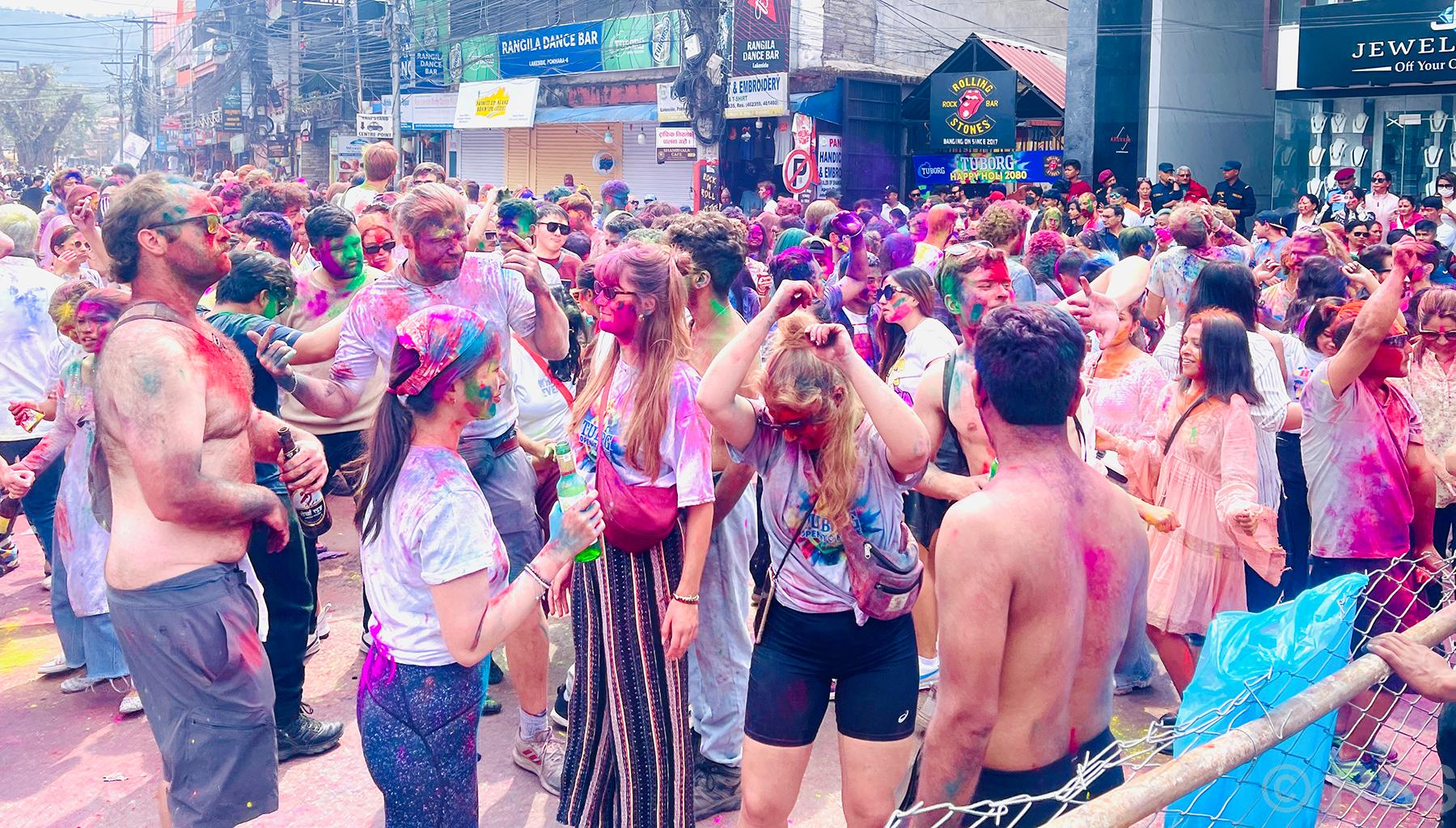
 How is Holi Celebrated in Nepal?